Up in The Rafters
How Much Is a NBA Finals Championship Ring Worth?
Discover how much NBA Finals championship rings are worth! From $30K-$150K+ costs to auction prices reaching $160K. Complete guide to ring values
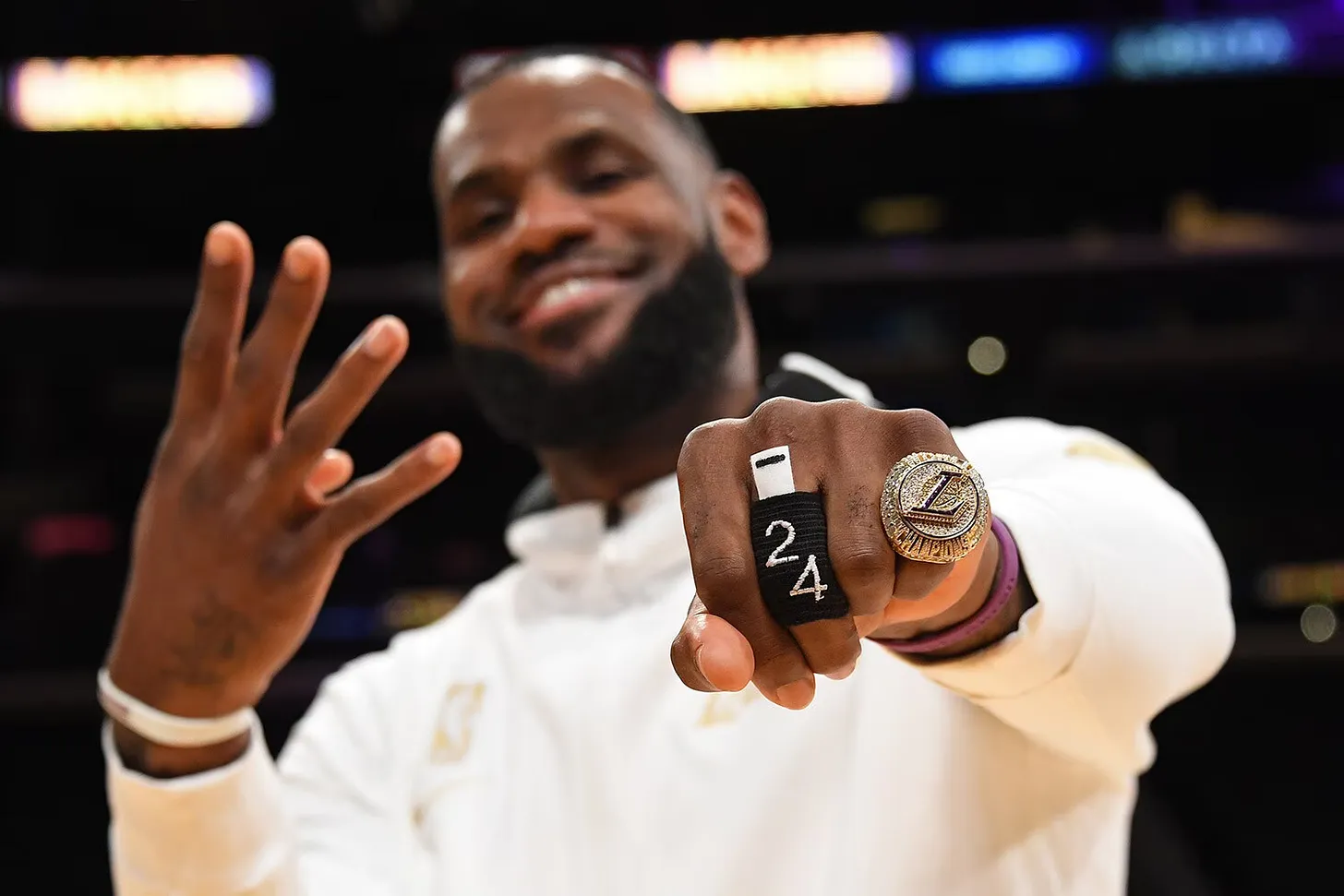
I was there for Jordan’s last shot in Utah. I watched LeBron fulfill his promise to Cleveland in '16. But seeing Shai Gilgeous-Alexander raise the first banner in Oklahoma City history last October hit different.
I’ve spent nearly 30 years tracking the evolution of this league, and nothing captures the changing face of the NBA quite like the jewelry. We've gone from modest gold bands to wearable trophies worth more than a luxury car.
With the Oklahoma City Thunder now reigning supreme, a familiar question has resurfaced in collector circles: Just how much are these championship rings actually worth?
The Real Numbers Behind the Bling
Let’s cut through the hype: What does it cost to make one?
Based on industry reports and team disclosures, a standard NBA Finals championship ring typically costs the franchise between $30,000 and $50,000 to produce. However, the "Tier 1" rings given to players and coaches—the ones adorned with the highest clarity diamonds and heaviest gold content—often carry a valuation between $50,000 and $150,000.
The Price of Victory:
2023 Nuggets Ring: Featured over 16 carats of diamonds, rubies, and sapphires. It even included a retractable compartment revealing the championship banner—innovation that pushed the valuation well into six figures.
2024 Celtics Ring: A tech-forward masterpiece with 15 carats of natural diamonds and an integrated NFC chip.
2025 Thunder Ring: Early appraisals suggest OKC spared no expense for their inaugural title, with valuations rivaling the most expensive rings in league history.
But the production cost is just the floor. The ceiling is found on the secondary market, where collectors pay astronomical sums for a piece of history.
What Drives These Jaw-Dropping Valuations?
1. The Arms Race of Craftsmanship
Having followed this evolution since the 90s, I can tell you: the rings are getting bigger, louder, and smarter. Owners are no longer just competing on the court; they are competing to outdo the previous year's jewelry.
According to Jason of Beverly Hills, the go-to designer for modern NBA champions, "Athletes are naturally competitive, but owners are also competitive. They want to outdo each previous ring."
Modern "Super-Ring" Features:
High-Grade Metals: Exclusively 14K or 18K gold.
Gemstone Density: Hundreds of stones, often totaling 10+ carats.
Storytelling: The 2024 Celtics ring featured 18 emerald-cut diamonds on the bezel to symbolize their 18 banners.
Tech Integration: The Celtics were the first to embed an NFC chip, allowing players to tap their phone against the ring to play a personalized victory video.
2. Legacy and "The Story"
Collectors don't just buy diamonds; they buy narratives. A ring from a generic role player on a forgettable team is valuable, but a ring from a Dynasty or a Curse-Breaker? That is the holy grail.
Jordan's Bulls (1990s): The gold standard. Authentic player rings regularly clear $80,000.
LeBron's Cavaliers (2016): Because of the 3-1 comeback, this is arguably the most culturally significant ring of the modern era.
Thunder (2025): The "First Title" premium. Just like the Nuggets in '23, the first ring in franchise history always commands higher long-term value due to its uniqueness.
The Auction Market Reality
When these rings hit the auction block, the "melt value" of the gold becomes irrelevant. It becomes about scarcity.
Notable Auction Sales:
Ring | Sale Price | Notes |
1981 Boston Celtics (Exec) | $160,677 | High value due to the Bird era legacy. |
1997 Chicago Bulls | $81,037 | The "Flu Game" year. |
2000 LA Lakers | $76,846 | The start of the Shaq/Kobe dynasty. |
Insider Note: Paradoxically, executive rings often sell for more than player rings (excluding superstars). Why? Scarcity. Teams produce fewer high-tier executive rings than they do for the roster, making them rarer finds for completist collectors.
The Investment Perspective
From observing the collectibles market alongside my basketball fandom, championship rings have graduated from memorabilia to asset class.
Key Value Drivers:
Franchise Heritage: Lakers, Celtics, and Bulls rings carry a "Blue Blood" tax.
Star Power: Any connection to Hall of Fame talent spikes the value.
Narrative: First-time winners (like OKC in 2025) or drought-breakers.
For example, the 2016 Cavaliers ring has seen significant appreciation simply because of the impossibility of that victory. I watched that series in disbelief, and now, investors are watching the value of those rings climb.
Looking Ahead: The Thunder's 2025 Ring
The 2025 Thunder ring is currently the talk of the industry. Designed to commemorate Shai Gilgeous-Alexander's MVP-caliber Finals run and the franchise's arrival as a dynasty-in-the-making, early estimates place the collector value in the $75,000 to $100,000 range immediately out of the gate.
The Bottom Line
After nearly 30 years of following this incredible league, I've learned that a championship ring's true value can't be measured in dollars alone.
Yes, they contain luxury condos' worth of diamonds. Yes, they can sell for six figures at Sotheby's. But for the players? They are the physical proof of immortality. And for us fans and collectors? They are tangible pieces of the history we witnessed.
In a league where everything has a price tag—from courtside seats to jersey patches—the championship ring remains the one thing you can't just buy. You have to earn it. (Unless, of course, you have $100,000 and a paddle at the next auction).
Sources:
More in NBA
View all