Up in The Rafters
LeBron James and Others in the Impossible Art of Walking Away
LeBron, Kobe, Ali, Mays: Why sports legends struggle to walk away. Explore the impossible art of retiring and why Father Time always wins.
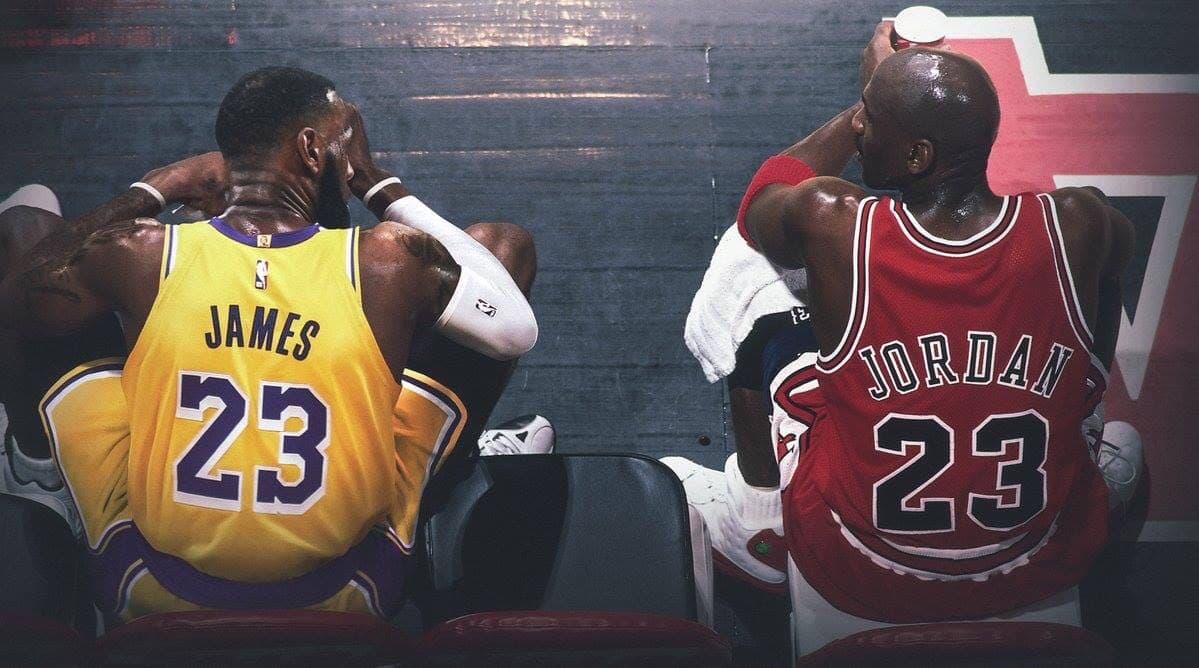
In the history of professional sports, the "graceful exit" is perhaps the rarest achievement. For every athlete who retires at the peak of their powers, dozens more linger on the court, the diamond, or in the ring, engaged in a tragic tug-of-war with Father Time. This phenomenon of "playing too long" is not merely about a decline in statistics; it is about the erosion of a legend's aura, where the very brilliance that defined them becomes a shadow of its former self.
As of February 2026, the most prominent case study in this balancing act is LeBron James. Now in his 23rd NBA season, James continues to defy biological norms, yet even "The King" is showing the inevitable fissures of age. In contrast, history offers the somber warnings of Kobe Bryant's final years, the physical toll of Muhammad Ali's late-career fights, and the statistical freefall of baseball icons like Willie Mays and Albert Pujols.
The Eye Test: LeBron's Visible Decline
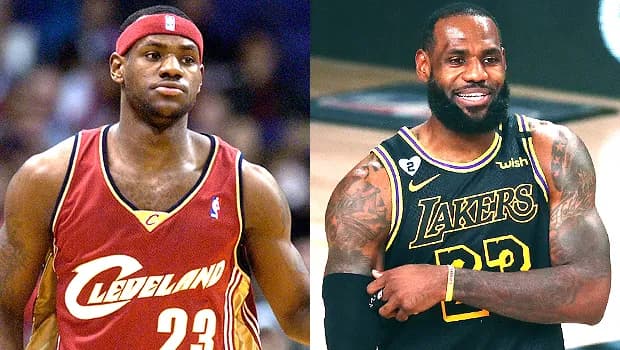
LeBron James has spent the better part of two decades as the standard-bearer for longevity. His commitment to recovery—spending over $1 million annually on his body—has allowed him to remain an elite force well into his 40s. However, the 2024–25 and 2025–26 seasons have introduced a version of James that is, for the first time, distinctly human.
Watching LeBron play over the past couple of seasons, it has become increasingly evident that he has lost his legs. The lift that once made him a freight train in transition has noticeably evaporated. This physical decline shows most clearly in his perimeter game: his three-point shot, once a reliable tool in his arsenal, now consistently hits the front of the rim, a tell-tale sign that the lower-body power required for long-distance shooting is failing him late in games.
The struggle is even more jarring at the rim. The "Chosen One," who spent two decades posterizing the league's best shot-blockers, now finds that many layups around the basket fail to go above the rim. He is increasingly forced to rely on craftiness and English off the glass because the vertical explosion is no longer there to bail him out. Defensively, the decline is equally noticeable; his rotations are significantly slower, often leaving him a step behind on closeouts or late to provide help-side protection. While he remains a near triple-double threat due to his high basketball IQ, the physical dominance that once terrified opponents has been replaced by a cerebral, ground-bound style that struggles to keep pace with the league's younger stars. While LeBron's statistics still look good on paper, the eyes don't lie. You can see that the physical edge he once had over everybody else is slipping away.
The Farewell Burden: Kobe Bryant's Final Act
The struggle to let go is perhaps most vividly remembered in the final three seasons of Kobe Bryant. Following a devastating Achilles injury in 2013, the "Black Mamba" became a different player. From 2013 to 2016, Bryant averaged 18.9 points but shot with dwindling efficiency, often forcing difficult shots that his aging body could no longer reliably convert.
In his final season (2015–16), Bryant averaged 17.6 points on a career-low shooting percentage. While fans voted him into his 18th All-Star game out of reverence, the nightly reality was often painful to watch: a legend struggling to lift a rebuilding Lakers team out of the Western Conference basement. His career ended with a poetic 60-point finale (On 50 shots!), but that single night largely masked three years of physical hardship that many felt tarnished the end of his competitive legacy.
The Heavy Toll: Muhammad Ali and the Ring
In basketball, "playing too long" results in missed jumpers; in boxing, it results in permanent neurological damage. The most heartbreaking example remains Muhammad Ali.
In 1980, a 38-year-old Ali returned from retirement to fight Larry Holmes. Ali was already exhibiting early signs of Parkinson's syndrome, including slurred speech and diminished reflexes. The fight was so lopsided that Holmes reportedly wept in the ring, begging the referee to stop the contest as he punished his idol. Ali's trainer, Angelo Dundee, finally halted the fight in the 10th round, marking the only time "The Greatest" was ever stopped in his professional career. This unnecessary return is widely cited as a major contributing factor to the severity of Ali's later health struggles.
Baseball's Long Goodbye: Mays, Griffey, and Pujols
Baseball, with its 162-game grind, has a unique way of exposing the "washed" superstar.
Willie Mays: The "Say Hey Kid" is often cited as the ultimate example of staying too long. In his final season with the New York Mets (1973), Mays hit just .211 with six home runs. Seeing the greatest center fielder of his generation stumble in the outfield during the World Series remains one of the sport's most enduring "too long" cautionary tales.
Ken Griffey Jr.: After a career defined by grace and power, Griffey's return to the Seattle Mariners ended abruptly in 2010. At age 40, he hit .184 with zero home runs in 33 games before retiring mid-season, a quiet end for a man who hit 630 career homers.
Albert Pujols: Before a miraculous final-season resurgence in 2022, where he reached 700 home runs, Pujols endured years of below-average production. From ages 37 to 41, his WAR (Wins Above Replacement) and OPS+ fell below league average, leading to his release from the Los Angeles Angels in 2021. While his "fairytale" ending in St. Louis salvaged his legacy, it followed nearly half a decade of "hanging on."
Why They Linger
The reasons athletes stay too long are as varied as their careers. For some, like Muhammad Ali, it was the lure of a massive payday. For others, like LeBron James, it is the pursuit of unprecedented records and the chance to play alongside family.
Ultimately, the drive that makes these athletes "The Greatest" is the same drive that prevents them from seeing what is obvious to the rest of the world: that the version of themselves they are chasing no longer exists. Whether it is LeBron James in 2026 or Willie Mays in 1973, the battle with age is the one game no superstar can win.
Understanding who has the most playoff losses in NBA history helps illustrate how longevity, while admirable, comes with inevitable decline. For more insights on the economics driving player decisions and how championship rings maintain their value regardless of when players retire, check out our other coverage.
More in NBA
View all