Up in The Rafters
2026 Final Four Predictions and March Madness History
From the 1939 Tall Firs to 2026 Final Four picks, explore the full history of March Madness and our bold predictions for this year's tournament.
The NCAA Division I Men's Basketball Tournament, or "March Madness," is more than just a sporting event — it is a cultural phenomenon that paralyzes offices and unites (or divides) households every spring. What began as a modest eight-team affair has evolved into a 68-team gauntlet that generates billions in revenue and produces some of the most enduring "Cinderella" stories in American history.
The Genesis: Harold Olsen's Vision (1939)
The tournament was the brainchild of Harold Olsen, the head coach at Ohio State. In 1939, Olsen convinced the National Association of Basketball Coaches that a postseason playoff was necessary to crown a true national champion. At the time, the National Invitation Tournament (NIT) in New York was actually the more prestigious event.
The inaugural NCAA tournament featured just eight teams. The University of Oregon — nicknamed the "Tall Firs" for their height — defeated Ohio State 46–33 in the first championship game. Despite the historic nature of the event, it was a financial flop, losing roughly $2,500 in its first year.
The Era of the Wizard: UCLA's Dominance
For decades, the tournament remained a relatively niche event. It expanded to 16 teams in 1951 and 25 by the mid-1950s. However, the 1960s and 70s saw the rise of the greatest dynasty in college sports: the UCLA Bruins.
Under legendary coach John Wooden — the "Wizard of Westwood" — UCLA won 10 national championships in a 12-year span (1964–1975), including seven in a row. This era featured icons like Lew Alcindor (later Kareem Abdul-Jabbar) and Bill Walton, whose 1973 title game performance remains the gold standard: he scored 44 points on 21-of-22 shooting.
Players like Kareem Abdul-Jabbar went on to reshape professional basketball as well — you can read more about the stars those UCLA teams produced in our look at Dirk Nowitzki and the European pioneers who followed in their footsteps.
The "Madness" Goes Mainstream (1979–1985)
The modern identity of the tournament was forged in 1979. That year's championship game between Magic Johnson's Michigan State and Larry Bird's Indiana State remains the highest-rated basketball game in television history. It proved to networks that college basketball was a goldmine.
The term "March Madness" was officially popularized in 1982 by CBS broadcaster Brent Musburger, though the phrase actually originated in Illinois high school basketball in 1939. That same year (1982) saw a freshman named Michael Jordan hit the winning shot for North Carolina, further cementing the tournament's place in the national consciousness.
In 1985, the field expanded to 64 teams, eliminating "byes" for top seeds and creating the four-day opening weekend of chaos that we recognize today. This expansion immediately paid off when No. 8 seed Villanova defeated the heavily favored Georgetown in a "perfect game" to become the lowest seed ever to win a title.
Modern Milestones and Cinderellas
In the 21st century, the tournament has continued to grow, expanding to 68 teams in 2011 with the addition of the "First Four" play-in games. This era has been defined by the breakdown of "invincibility" for top seeds:
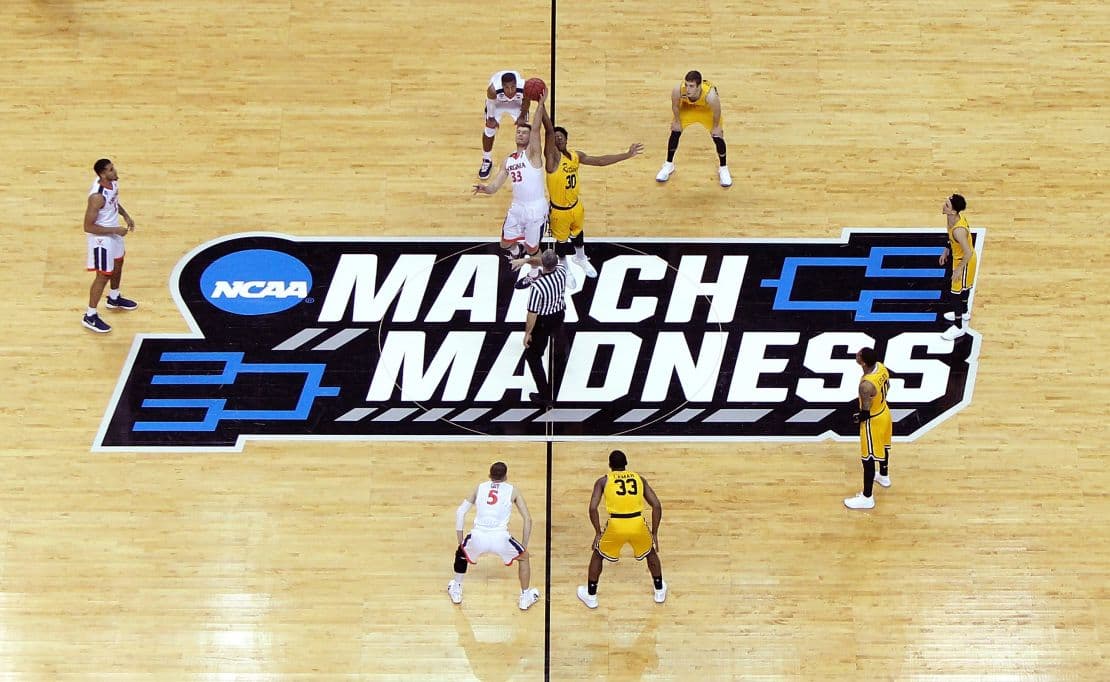
2018: No. 16 UMBC stunned No. 1 Virginia, the first time a 16-seed ever beat a 1-seed.
2022: No. 15 Saint Peter's captured the world's heart by advancing all the way to the Elite Eight.
2024: UConn completed a dominant back-to-back run, reminding fans that while upsets are the soul of the tournament, greatness still resides at the top.
The economic engine behind these moments is staggering — much like the NBA's billion-dollar ecosystem, the NCAA tournament has become a financial juggernaut that funds college athletics programs across the country.
For a full statistical breakdown of every tournament's history, ESPN's March Madness records hub is the definitive resource.
2026 Final Four Predictions
As we head into the thick of this year's bracket, the landscape is a fascinating mix of blue bloods and surging powers. Based on the current momentum of the 2025–26 season, here is my predicted Final Four:
Region | Team | Why They'll Make It |
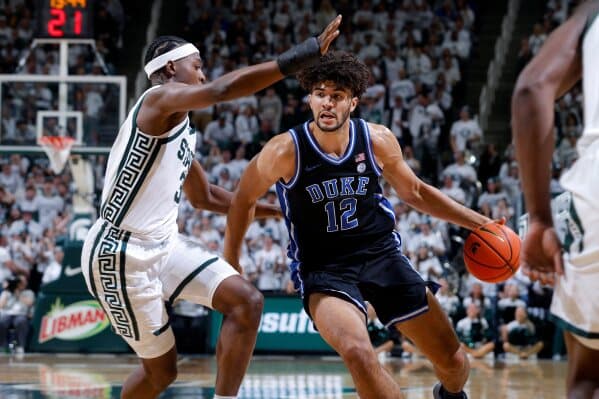
East | Duke | Led by Cameron Boozer, the Blue Devils have the most NBA-ready talent and a stifling defense. |
West | Arizona | Tommy Lloyd has the Wildcats playing at a lightning pace; Koa Peat is a mismatch nightmare. |
South | Florida | The Gators are looking for a repeat. Their frontcourt experience (Haugh and Condon) is built for March. |
Midwest | Michigan | Despite some late-season stumbles, their veteran backcourt knows how to close tight games in the tournament. |
The National Champion: I'm leaning toward Duke. Their "chalk" dominance this year feels reminiscent of the great 2001 or 1992 squads. Jon Scheyer has finally found the perfect balance of freshman phenoms and disciplined veterans.
Want to follow along all tournament long? Subscribe to Up in the Rafters for sharp takes, bracket breakdowns, and picks as the madness unfolds.