Up in The Rafters
How Does March Madness Work?
March Madness explained: how 68 teams, seeding, brackets, upsets, and the Final Four actually work. Your complete guide to the NCAA Tournament.
If you've ever found yourself in an office pool picking random teams because you liked their mascot and still somehow finishing in second place, you already understand the beautiful chaos of March Madness. But if you want to actually know what's going on when 68 college basketball teams descend on arenas across the country every spring, I've got you covered.
Here's everything you need to know about how March Madness works, why it matters, and why I genuinely think it's the best three weeks in American sports.
What Is March Madness?
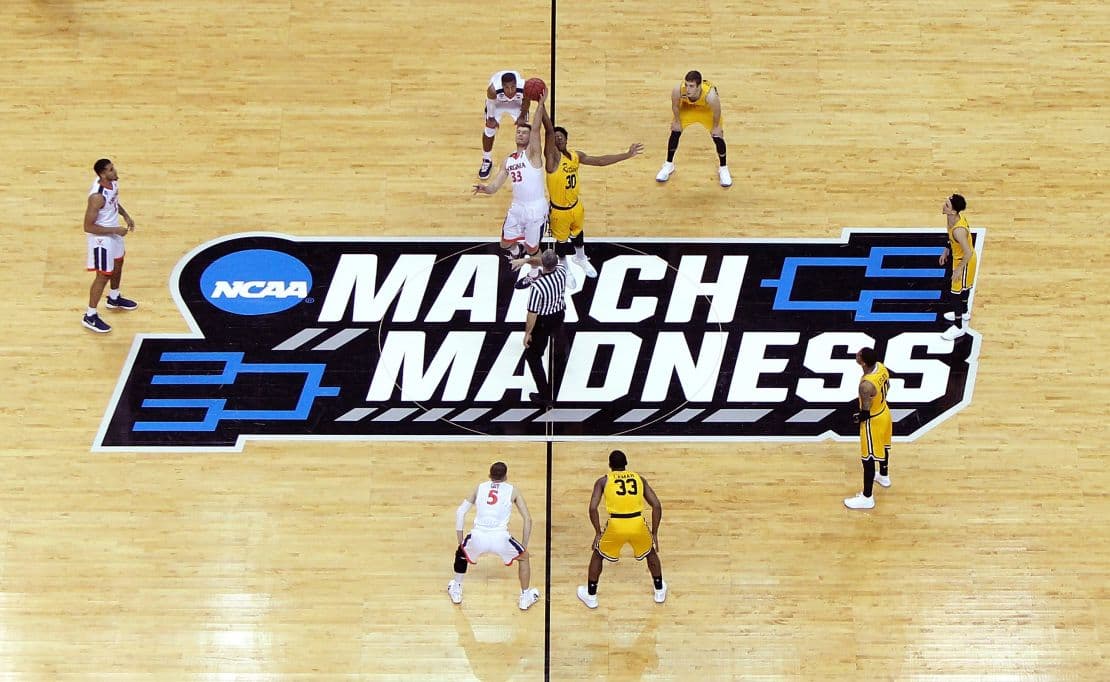
March Madness is the term used to describe the annual men's and women's NCAA Division I basketball tournament. Every March, 68 teams play in up to seven rounds of single-elimination games for the chance to win a national championship.
That single-elimination format is the whole point. There are no series, no second chances, no best-of-seven safety nets. You lose once and you go home. It's brutal, it's dramatic, and it's why the thing produces more water-cooler moments than any other event in the sports calendar.
Even the phrase "March Madness" has a longer history than many casual viewers realize. It was first used in a basketball context by Illinois high school official Henry V. Porter in 1939, but it did not become closely associated with the NCAA men's tournament until CBS broadcaster Brent Musburger used it during the 1982 tournament. Since then, the name has been inseparable from the event.
How Do Teams Get Into the Tournament?
This is where a lot of people get confused, so let me break it down simply.
There are two ways a team can earn a bid to the NCAA tournament. The 31 Division I conferences all receive an automatic bid, which they each award to the team that wins the postseason conference tournament. Regardless of how a team performed during the regular season, if they are eligible for postseason play and win their conference tournament, they receive a bid to the NCAA tournament. The second avenue for an invitation is an at-large bid.
The other 37 teams are selected by a committee as an "at-large" bid. That group is chosen based on overall performance, including record, strength of schedule and quality wins.
The selection committee uses a model called the NET rankings (NCAA Evaluation Tool) to evaluate teams. It considers things like road wins, opponent quality, and margin of victory. It's a complicated formula, but the simple version is: beat good teams in tough places, and you'll get noticed.
How Teams Qualify: A Quick Summary
Qualification Type | Number of Teams | How They Earn It |
Automatic Bid | 31 | Win their conference tournament |
At-Large Bid | 37 | Selected by the NCAA committee |
Total Field | 68 |
What Is Selection Sunday?
Selection Sunday is the day everything comes together. The NCAA Selection Committee reveals the full tournament bracket on Selection Sunday, including which teams have qualified and where they have been seeded.
This is a legitimate national event. Fans tune in, analysts debate bubble teams, and programs across the country either celebrate or sulk. There's a whole subculture of "bracketologists" who spend months projecting who will make the field. It's genuinely one of the more entertaining lead-ups in sports.
The Tournament Format, Round by Round
Here's where I want to walk you through the structure carefully, because it's actually pretty elegant once you see it laid out.
The First Four
The First Four features four single-elimination games played to trim the number of teams in the field from 68 to 64 for the first round. These games are always played in Dayton, Ohio, and feature two matchups between the lowest-ranked automatic qualifiers and two between the last at-large teams selected.
Most bracket pools don't even ask you to pick these games, which honestly makes sense. They're the appetizer. The main course starts next.
The Full Round Breakdown
The tournament is single elimination. Lose once and you're done. The bracket unfolds over six rounds across three weeks.
Round | Teams Remaining | Common Name |
First Four | 68 to 64 | First Four |
Round 1 | 64 to 32 | Round of 64 |
Round 2 | 32 to 16 | Round of 32 |
Regional Semifinals | 16 to 8 | Sweet 16 |
Regional Finals | 8 to 4 | Elite Eight |
National Semifinals | 4 to 2 | Final Four |
Championship | 2 to 1 | The Title Game |
The Sweet 16, Elite Eight, and Final Four are the names everyone knows. They've become part of the American sports lexicon in a way that feels almost inevitable in retrospect, but someone had to come up with them.
The Four Regions
The 64-team first-round field is divided into four regional brackets: the South, Midwest, East and West. Each region has 16 teams seeded 1 through 16. The winners of each regional bracket advance to the Final Four, where the last two teams standing play for a national championship.
How Does Seeding Work?
Seeding is essentially a ranking system within each region. In order to reward better teams, first-round matchups are determined by pitting the top team in the region against the bottom team (No. 1 vs. No. 16). Then the next highest vs. the next lowest (No. 2 vs. No. 15), and so on.
The idea is that the best teams earn the easiest first-round matchups. Whether that actually plays out that way is another story entirely, which brings me to my favorite part of all of this.
First-Round Seed Matchups
Higher Seed | Lower Seed |
1 | 16 |
2 | 15 |
3 | 14 |
4 | 13 |
5 | 12 |
6 | 11 |
7 | 10 |
8 | 9 |
The brackets are then organized into four regions with teams ranked 1 to 16. This system rewards the higher-ranked teams by pairing them against lower-ranked opponents in the early rounds.
Upsets and Cinderella Teams: The Whole Point
Here's the thing about March Madness that keeps bringing people back. A team can dominate its conference all winter, only to see its season end in the space of a single 40-minute game. At the same time, a lower-seeded outsider can catch fire for a night and suddenly become the story of the tournament. That unpredictability is what fuels the upsets that define March Madness.
These underdog runs have a name: Cinderella stories. And the tournament has produced some all-time classics.
The Saint Peter's Peacocks in 2022 are the only No. 15 seed to reach the Elite Eight in tournament history. Saint Peter's came in with a 19-11 record, zero name recognition outside of Jersey City, and somehow knocked off Kentucky before winning two more games. The country went absolutely insane for them.
Then there's VCU in 2011. In the inaugural edition of the First Four games, Virginia Commonwealth University became the first team to go from the First Four to the Final Four. They won five straight games, four of them by double digits. Coach Shaka Smart became a household name overnight.
And nobody has topped UMBC in 2018. According to the point spreads, the four biggest upsets by underdogs expected to lose by at least 20 points were Fairleigh Dickinson in 2023, Norfolk State in 2012, UMBC in 2018 and Santa Clara in 1993. UMBC beating Virginia as a No. 16 seed is still the most shocking result in tournament history. Prior to that game, No. 16 seeds were 0-135 all time against No. 1 seeds. Then Maryland-Baltimore County walked in and ended that streak.
How Does a Bracket Work?
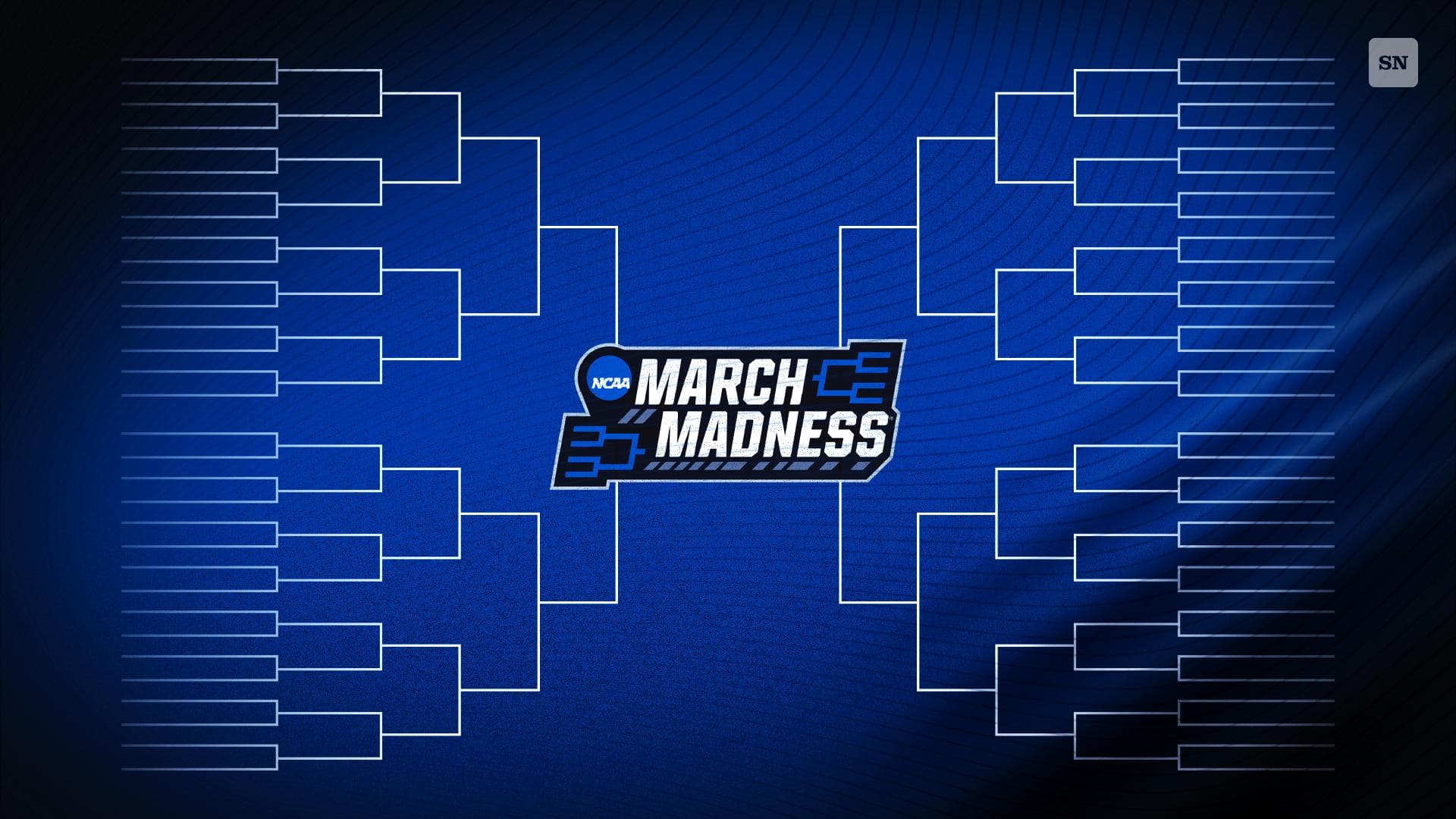
The bracket is arguably as big a phenomenon as the tournament itself. The NCAA estimates that there are 60 million to 100 million brackets submitted every year.
You pick winners for every game before the tournament starts. Each correct pick earns points, and most pools weight later rounds more heavily. There are six rounds of NCAA play beyond the First Four, and the stakes double with each round. Picking first-round winners will earn you one point, while correctly picking the NCAA champion is worth 32 points, the equivalent of correctly picking every first-round game.
The brutal reality is that a perfect bracket has never been verified. The odds of having a perfect bracket are 1 in 9.2 quintillion. The chances improve only slightly to 1 in 120.2 billion for someone with more familiarity with the sport and its surrounding factors.
I've been filling out brackets for years. My strategy is essentially: pick a couple of 12-over-5 upsets, be cautious about touching 1 seeds, and quietly believe this is the year everything somehow works out. It never does. But that's the whole point.
Historically Safe and Risky Matchups
Matchup | History |
No. 1 vs No. 16 | 1 seeds are 158-2 all time |
No. 12 vs No. 5 | 12 seeds win roughly 35% of the time |
No. 11 vs No. 6 | 11 seeds regularly reach Final Fours |
No. 8 vs No. 9 | Essentially a coin flip |
For more of my bracket strategy thoughts, check out what I've written about how the NHL playoffs work to see how single-game elimination pressure compares across sports.
Men's vs. Women's Tournament: What's Different?
The women's and men's tournaments are largely structured the same. Starting in 2022, both tournaments featured 68 teams. It was also the first time the women's tournament was allowed to use the trademarked March Madness brand, the result of an NCAA-commissioned gender equity report highlighting resource disparities between the men's and women's tournaments.
One notable difference: for the women's tournament, the top 16 seeds host the early rounds at their home arenas, while the men's early games are played at neutral sites. The overall format, seeding logic, and round structure are identical.
Where to Watch March Madness
All tournament games are broadcast by CBS, TBS, TNT and truTV under the program name NCAA March Madness. With a contract through 2032, Paramount Skydance and Warner Bros. Discovery pay $891 million annually for the broadcast rights.
That means games are spread across four different channels on any given day, often simultaneously. The first Thursday and Friday of the tournament are basically national sick days. I'm not saying you should fake an illness to watch college basketball. I'm just saying it happens, and I understand.
Why March Madness Is Different From Every Other Sport
I've watched a lot of playoffs in a lot of sports. Nothing hits like this. Part of it is the format: one loss and it's over. Part of it is the players: these are college kids, many of whom will never play professionally, leaving it all out there. Part of it is the brackets: suddenly your aunt who has never watched a game in her life has a horse in the race because she picked Duke.
The tournament also creates stories that nobody could write in advance. The buzzer beaters, the double-digit upsets, the unknown junior from a mid-major conference who goes on a run that earns him a sneaker deal. In 1982, a young Michael Jordan hit the shot that helped North Carolina beat Georgetown for the national title. That moment helped launch one of the greatest careers in sports history. March Madness has a way of doing that.
If you want a deeper look at the economics behind big-time college athletics, check out our breakdown of how the NBA generates its billions because the revenue model behind college basketball shares more in common with pro sports than most people realize.
For the official bracket, schedule, and real-time scores, the best place to go is NCAA.com, which keeps everything updated throughout the tournament.
The Bottom Line
March Madness works because the format is ruthless and the stakes are real. Sixty-eight teams enter, one cuts down the nets. Along the way, you get heartbreak, miracle shots, 15-seeds knocking off powerhouses, and some kid from a school you've never heard of becoming an overnight folk hero.
Fill out your bracket. Pick a Cinderella. Watch the chaos unfold. And for the love of everything, please stop picking the same Final Four as everyone else in your office pool.
If you want to stay up on everything happening in college sports and beyond, subscribe to Up in the Rafters for sharp takes delivered straight to your inbox.