Up in The Rafters
Best Left-Handed Throwing Catchers in MLB History
Left-handed catchers in MLB history: only ~30 have ever played the position. Meet Jack Clements, Benny Distefano, and why the rule still stands today.
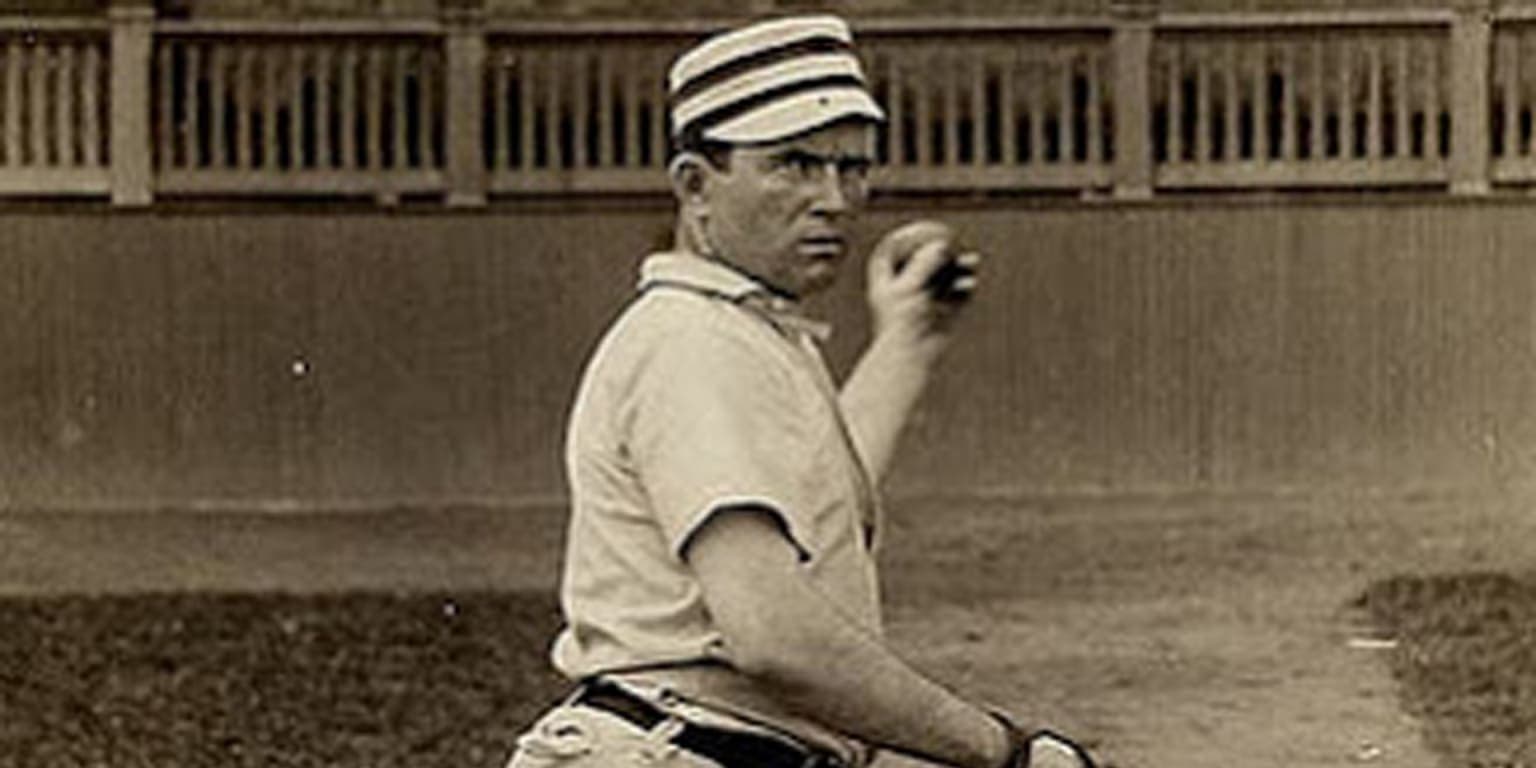
In the entire recorded history of Major League Baseball, a total of roughly 30 players have ever thrown left-handed from behind home plate. Of those, only one managed to catch more than 1,000 games.
The last time a southpaw caught even five games in a single MLB season was 1905. And since 1989, exactly zero left-handed throwers have caught a single pitch in the big leagues.
That is not a typo.
Left-handed catchers are not just rare. They are, for all practical purposes, extinct. But why? And does the conventional wisdom that keeps them off the field actually hold up? Let's dig into the full history, the real arguments, and the players who defied the norm anyway.
Why Are Left-Handed Catchers So Rare? The Real Reasons
Baseball has a long list of unwritten rules, and "left-handers don't catch" sits near the top. Several arguments have been made over the years to justify this. Some hold water. Others, when you actually look at the data, fall apart entirely.
The Arguments That Are Mostly Myth
"Throwing through the batter hurts a lefty's accuracy to second base."
This is the most commonly cited reason, and statistically, it does not hold up. Right-handed catchers throw to second base with a left-handed batter standing in their way all the time. Analysis of 2019-20 MLB data found that right-handed catchers threw out base stealers at exactly the same rate whether the batter at the plate was left-handed or right-handed: 26.2% in both cases. The batter in the box simply does not affect accuracy the way people assume. In fact, according to MLB.com's deep dive on the subject, right-handed catchers may actually generate more velocity when a left-handed batter is up because the repositioning creates a more powerful lower-half load.
"Left-handed throws have too much natural tail on them."
Benny Distefano, the last lefty to catch in the majors, acknowledged his throws had some run on them, but he never found it to be a genuine problem during his time in the instructional league. He also made a fair counterargument: the majority of pitchers are right-handed, meaning most curveballs and sliders break away from right-handed hitters and into the natural glove path of a left-handed catcher. That is actually an advantage.
The Arguments That Are Legitimate
Throwing to third base is genuinely awkward.
A right-handed catcher can stay planted and fire to third. A left-hander has to pivot their entire body first. On bang-bang plays where fractions of a second determine the outcome, that is a real disadvantage.
Tag plays at home plate are harder.
A right-handed catcher receives a throw from the outfield and drops the glove for a tag in one fluid motion. A lefty would have to receive the ball in their right (gloved) hand, then turn the body to apply the tag. It is less efficient. That said, the frequency of legitimate plays at the plate has declined significantly in the modern game, making this less of a deal-breaker than it once was.
The real culprit: nobody develops them.
This is the most honest answer of all. If a kid has a strong left-handed arm, coaches point him at the mound. By the time players reach professional baseball, potential left-handed catchers have been quietly redirected for years. The pool simply never forms.
A Complete Look at Left-Handed Catchers in MLB History
Here is a summary of the most significant left-handed throwers to ever catch in the big leagues, organized by era:
Player | Years Active | Teams | Games Caught | Notes |
Jack Clements | 1884-1900 | Philadelphia Quakers/Phillies | 1,000+ | Only LH catcher with 1,000+ games ever |
Jiggs Donahue | 1900-1902 | Multiple | ~10 | Last to catch 5+ games in a season (1902) |
Dale Long | 1958 | Chicago Cubs | 2 | Caught 1 2/3 innings; glove now in Hall of Fame |
Mike Squires | 1980 | Chicago White Sox | 2 | Two one-inning stints; primarily a Gold Glove 1B |
Benny Distefano | 1989 | Pittsburgh Pirates | 3 | Last LH catcher in MLB; 6 total innings |
Since Distefano's final appearance on August 18, 1989, not a single left-handed thrower has caught a pitch in an MLB game. Over 35 years and counting.
Jack Clements: The Only True Left-Handed Catcher in MLB History
If you want to understand just how singular Jack Clements was, consider that he played over 1,000 games behind the plate as a lefty at a time when the position was arguably more physically demanding than it is today. He played from 1884 to 1900, primarily for the Philadelphia Quakers and later the Phillies, and he did not just survive as a left-handed catcher, he thrived.
Clements also holds the distinction of being the first catcher in professional baseball history to wear a chest protector. He was an innovator in every sense of the word, and no one has come close to replicating his career at the position while throwing left-handed.
The Modern Era: Three Men, Nine Innings
Since 1905, only three left-handed throwers have caught in the major leagues. Together, they account for fewer than ten total innings behind the plate.
Mike Squires (1980, Chicago White Sox)
Squires was primarily a defensive first baseman who won a Gold Glove in 1981. His path to catching started at a Spring Training hotel pool in 1978, when he and White Sox GM Roland Hemond got into a conversation about left-handed catchers. Two days later, a custom left-handed catcher's mitt arrived in the mail. Two years after that, manager Tony La Russa put Squires behind the plate for two one-inning stints.
"I had good hands and that's what really you're looking for in a third catcher," Squires said. "You want somebody who can go behind the plate and, more than anything, be able to catch the ball."
His most memorable moment came in his first game: Hall of Famer Robin Yount came to the plate with a runner on first and no outs. Squires called for a full-count curveball. Yount froze. Strike three. "You should have seen the look on Robin's face," Squires recalled.
Dale Long (1958, Chicago Cubs)
Long was an outfielder and first baseman best known for hitting home runs in eight consecutive games for the Pirates in 1956, a record later matched by Don Mattingly and Ken Griffey Jr. In 1958 with the Cubs, he caught a grand total of 1 2/3 innings across two games. His left-handed catcher's mitt is now part of the Baseball Hall of Fame's collection in Cooperstown.
Benny Distefano (1989, Pittsburgh Pirates)
Distefano is the last left-handed thrower to catch in MLB, and his story is one of the most entertaining in modern baseball history. It started at an airport bar in Philadelphia in September 1988, where Pirates pitching coach Ray Miller casually mused aloud, "How come there are no left-handed catchers?" That offhand comment, it turned out, was a seed deliberately planted.
Distefano, who had caught as a kid growing up in Brooklyn, went to manager Jim Leyland the next day and volunteered to be the team's emergency third catcher for 1989. He spent time in the fall instructional league working on the position, made the Opening Day roster, and caught three games that season for a total of six innings.
He had one passed ball, allowed one stolen base, and his pitchers threw one wild pitch during his appearances. By the standards of what he was asked to do, he was perfectly adequate.
"A lot of people thought it was a joke," Distefano said. "But I had a strong arm, so I was able to do it."
His last appearance came on August 18, 1989. No left-handed thrower has caught an MLB game since.
Why the Unwritten Rule Has Never Been Broken (Again)
The data suggests the conventional case against left-handed catchers is weaker than the sport has ever been willing to admit. The "throwing through the batter" argument is statistically baseless. The tag play issue is real but increasingly rare. The third-base throwing problem is legitimate but manageable.
So why has no team tested this in 35+ years?
Part of the answer is the development pipeline. Left-handed throwing prospects are steered toward pitching so consistently and so early that by the time a player reaches professional ball, virtually no left-handed catchers exist to evaluate. There is no chicken and egg mystery here; the egg never gets laid.
Part of the answer is also risk tolerance. Baseball teams are conservative institutions. Taking a chance on an unconventional left-handed catcher carries reputational risk for the organization and the player alike. Unless someone dramatically out-performs the competition at the minor league level, no team has had sufficient incentive to make the move.
The Baseball Hall of Fame currently holds four left-handed catcher's mitts in its collection. They are artifacts of a possibility that baseball decided, long ago, not to explore.
Debunking the Myths: A Summary
Argument Against LH Catchers | Verdict |
Throwing through the batter to 2B hurts accuracy | Myth: Data shows identical CS% regardless of batter side |
Left-handed throws have problematic tail | Partially true, but counterbalanced by glove advantage on breaking balls |
Throwing to 3B is more difficult | True, but manageable with proper footwork |
Tag plays at home are harder | True, but the play has become increasingly rare |
No left-handed role models or development programs | True, and this is the root cause of the scarcity |
Could a Left-Handed Catcher Return to the Majors?
There is a real argument that the right player, developed from a young age specifically for the position, could succeed as a left-handed catcher at the MLB level. The mechanical disadvantages are real but not insurmountable. The throwing mechanics to third and the home plate tag issue require adjustment, not elimination.
Youth baseball has become slightly more open to the idea. As recently as 2021, MLB.com profiled an 11-year-old left-handed catcher named Ben Whitley who was being mentored by Distefano himself. "If you're the best catcher on the team and you're left-handed," Whitley said, "the coach will play you."
Whether that attitude survives contact with high school coaches, travel ball scouts, and professional development systems remains to be seen. Baseball's bias against left-handed catchers is not rooted in ironclad physical law. It is rooted in habit, tradition, and a development infrastructure that has never seriously tried to produce one.
The unwritten rules of baseball have been challenged more aggressively in the past decade than at any point in the sport's history. Openers, defensive shifts, analytics, bat flips. This particular rule, though, has survived every era of change intact.
For now, Benny Distefano remains the answer to one of baseball's greatest trivia questions. And based on how baseball operates, he may hold that distinction for a while longer yet.
For more deep dives into MLB history and the quirks that make baseball unlike any other sport, check out our coverage of the rise of the cutter and how Mariano Rivera changed pitching forever and how much MLB umpires make.
FAQ: Left-Handed Catchers in MLB
Why are left-handed catchers so rare in baseball? The short answer is that left-handed throwers get redirected to pitching at a young age, so the development pipeline for left-handed catchers barely exists. The conventional case against them is also overstated: most of the claimed disadvantages either do not hold up statistically or are manageable with proper technique.
Who is the last left-handed catcher in MLB history? Benny Distefano of the Pittsburgh Pirates, who last caught on August 18, 1989. He caught three total games that season for six innings.
Who has caught the most games as a left-handed thrower in MLB history? Jack Clements, who caught over 1,000 games between 1884 and 1900. He is the only left-handed throwing catcher to have a full, sustained career at the position in major league history.
Have any left-handed catchers played in the modern era? Three: Mike Squires (1980, White Sox), Dale Long (1958, Cubs), and Benny Distefano (1989, Pirates). They combined for fewer than ten innings behind the plate.
Is there a rule against left-handed catchers in MLB? No formal rule exists. It is entirely an unwritten convention, one that has proven remarkably resistant to challenge despite the fact that the statistical and physical arguments against left-handed catchers are weaker than most people assume.
Could a left-handed catcher succeed in MLB today? Potentially, yes. The throwing disadvantage to third base is real, but manageable. The argument about throwing through the batter to second base does not hold up in the data. The biggest obstacle is the development pipeline: left-handed catchers are essentially never developed, so no pipeline of talent exists to test the theory.