Up in The Rafters
America's Grand Opening: The Rich History of MLB's Opening Day
From Taft's first pitch to Feller's no-hitter, explore the rich history of MLB's Opening Day — America's unofficial holiday and baseball's greatest tradition.
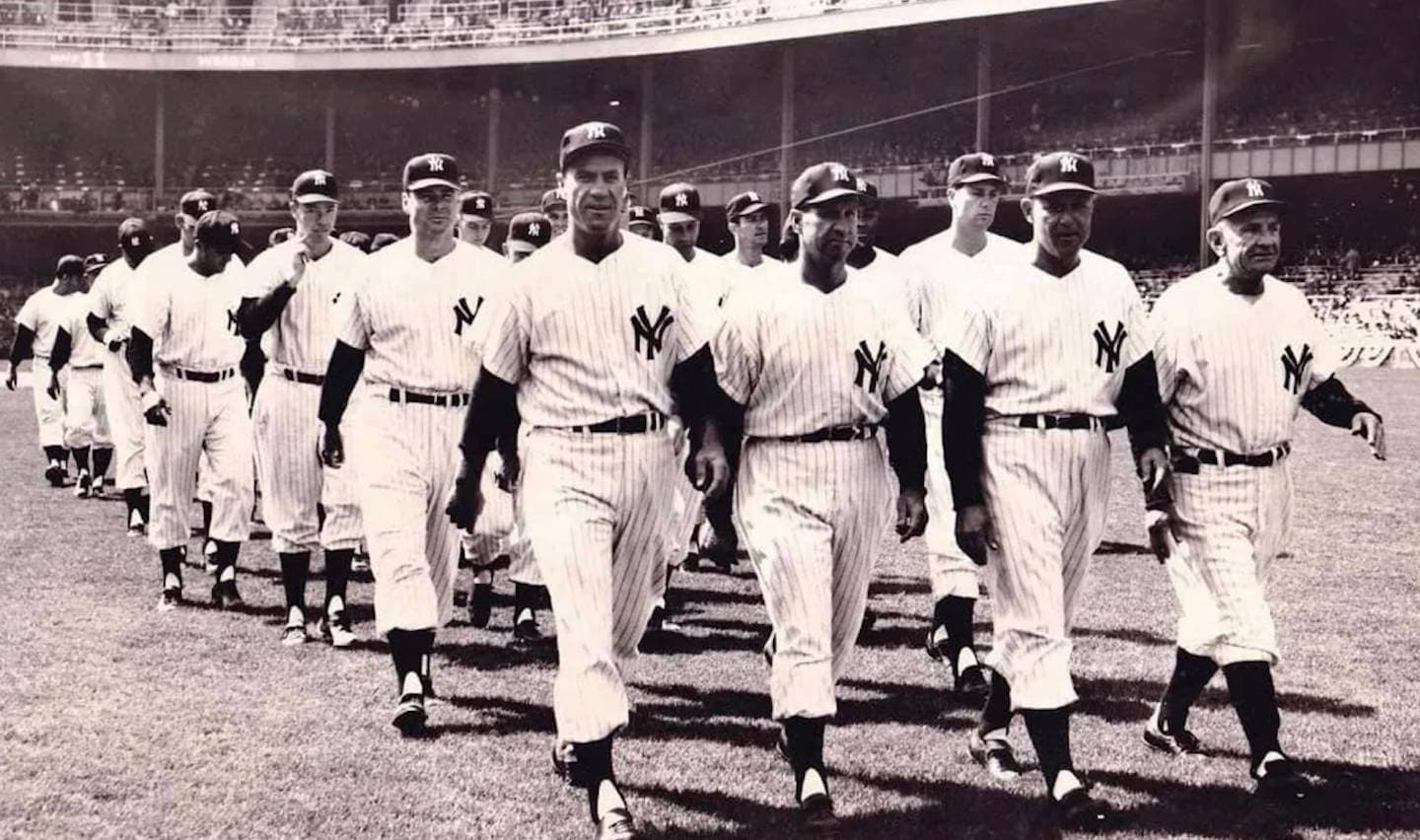
For baseball fans, Opening Day serves as a symbol of rebirth — writer Thomas Boswell once penned a book titled Why Time Begins on Opening Day. It is more than the start of a 162-game grind. It is an American institution, a collective exhale after a long winter, and a celebration of the sport that has defined this nation's cultural identity for nearly 150 years.
The Beginning of a Tradition
The first recorded Opening Day took place in 1876, when the National League began its inaugural season and Boston defeated Philadelphia. In those early years, teams started their seasons on different dates and there was little fanfare surrounding the first game. The idea of a single, unified Opening Day took time to catch on, but MLB quickly recognized the marketing buzz that such a moment could create.
From the very beginning, one city staked its claim as the spiritual home of Opening Day. As the game's first fully professional club, the Cincinnati Reds were awarded the right to begin every National League season at home. In Cincinnati, Ohio, an annual parade marks an unofficial "city holiday," with young and old alike taking the day off to cheer on the Reds. For decades, the first pitch of every major league season officially took place in Cincinnati.
That parade became legendary in its own right. In 1920, fans from the Findlay Market set the stage for a lasting Cincinnati tradition. To celebrate the team's victory in the 1919 World Series, shop owners and fans walked roughly one mile from the Findlay Market — Ohio's oldest continuously operating public market — to Crosley Field, to await the first pitch of the season. That walk evolved into the iconic Findlay Market Parade, an event so beloved that former Cincinnati owner Marge Schott once declared, "The Findlay Market Parade is Opening Day! Without the parade it just wouldn't be Opening Day!"
A National Event
During the first half of the 20th century, Opening Day was a major event in American culture. Many teams held parades and other celebrations to mark the beginning of the season, and baseball writers would cover it as if it were Christmas combined with the Super Bowl.
The significance of Opening Day only grew in the post-World War II era. With the rise of television and the increasing popularity of baseball, the first game of the season became a national event. Opening Day is a state of mind, with countless baseball fans known to recognize this unofficial holiday as a good reason to call in sick at work or skip school, heading out to the ballpark for the first of 162 regular season games. So widespread is the sentiment that in 2014, Hall of Famer Ozzie Smith was at the forefront of a group aiming to make it a national holiday, collecting signatures for a petition through the federal government's We the People petitioning program.
The occasion has also produced some of baseball's most indelible moments. On April 16, 1940, Cleveland ace Bob Feller tossed the only Opening Day no-hitter in Major League history, striking out eight batters and retiring 15 in a row between the fourth and eighth innings in a 1–0 win over the Chicago White Sox. In 1974, Hank Aaron tied Babe Ruth's all-time home run record on April 4th. And in 2021, Shohei Ohtani became the first player in MLB history to be the starting pitcher and bat leadoff in the same Opening Day game.
If you want to go deeper on the officiating side of the sport, our breakdown of how much MLB umpires make is worth a read — they're on the field for every one of those 162 games.
The Presidential First Pitch
Perhaps no tradition better illustrates Opening Day's place in the American consciousness than the presidential first pitch. One of baseball's most enduring Opening Day traditions, it dates back to April 14, 1910, when President William Howard Taft became the first sitting American president to throw the ceremonial ball, tossing it from his seat in the stands to Washington ace Walter Johnson, who kept the ball and had Taft autograph it after the game.
Twelve U.S. presidents have thrown the ceremonial first pitch of the season. Some left particularly memorable marks. Harry S. Truman showcased his ambidextrous talent when he threw out balls with both his right and left arm in 1950. On April 4, 1994, Bill Clinton inaugurated the Cleveland Indians' new ballpark, then known as Jacobs Field, with the first pitch. George W. Bush did the honors to inaugurate Nationals Park for the Washington Nationals on March 30, 2008. Two years later, on the 100th anniversary of Taft's first pitch, Barack Obama threw out the first pitch at Nationals Park — though he raised a few eyebrows by wearing a Chicago White Sox cap along with his Nationals jacket.
The King of Opening Day Starters
Being named an Opening Day starting pitcher is one of the highest honors a manager can bestow. It is a signal to the baseball world that this is the team's ace, its most trusted arm. No pitcher in the history of Major League Baseball has earned that honor more than Hall of Famer Tom Seaver. Seaver started the most Opening Day games in Major League history, taking the mound 16 times across three franchises — the New York Mets, Cincinnati Reds, and Chicago White Sox. His dominance and consistency across multiple franchises made him the gold standard of what an Opening Day starter should be.
At the other end of the age spectrum, Nolan Ryan is the oldest pitcher ever to start an Opening Day game. In 1993, he was 46 years old when he took the mound for the Texas Rangers.
The rise of the cutter and power pitching more broadly transformed what teams look for in an ace. Our piece on how Mariano Rivera changed pitching forever puts that evolution in sharp context.
The Spirit Endures
From a simple ballgame in 1876 to a coast-to-coast celebration, Opening Day has grown into one of the most cherished days on the American calendar. It represents optimism — every team begins at zero, every fan believes this could be their year. As long as there is baseball, there will be Opening Day, and as long as there is Opening Day, America will stop, breathe in the spring air, and believe.