Up in The Rafters
What Does Tapping Your Helmet Mean in Baseball?
What does tapping your helmet mean in baseball? It's the ABS Challenge — MLB's new ball-strike review system explained for the 2026 season.
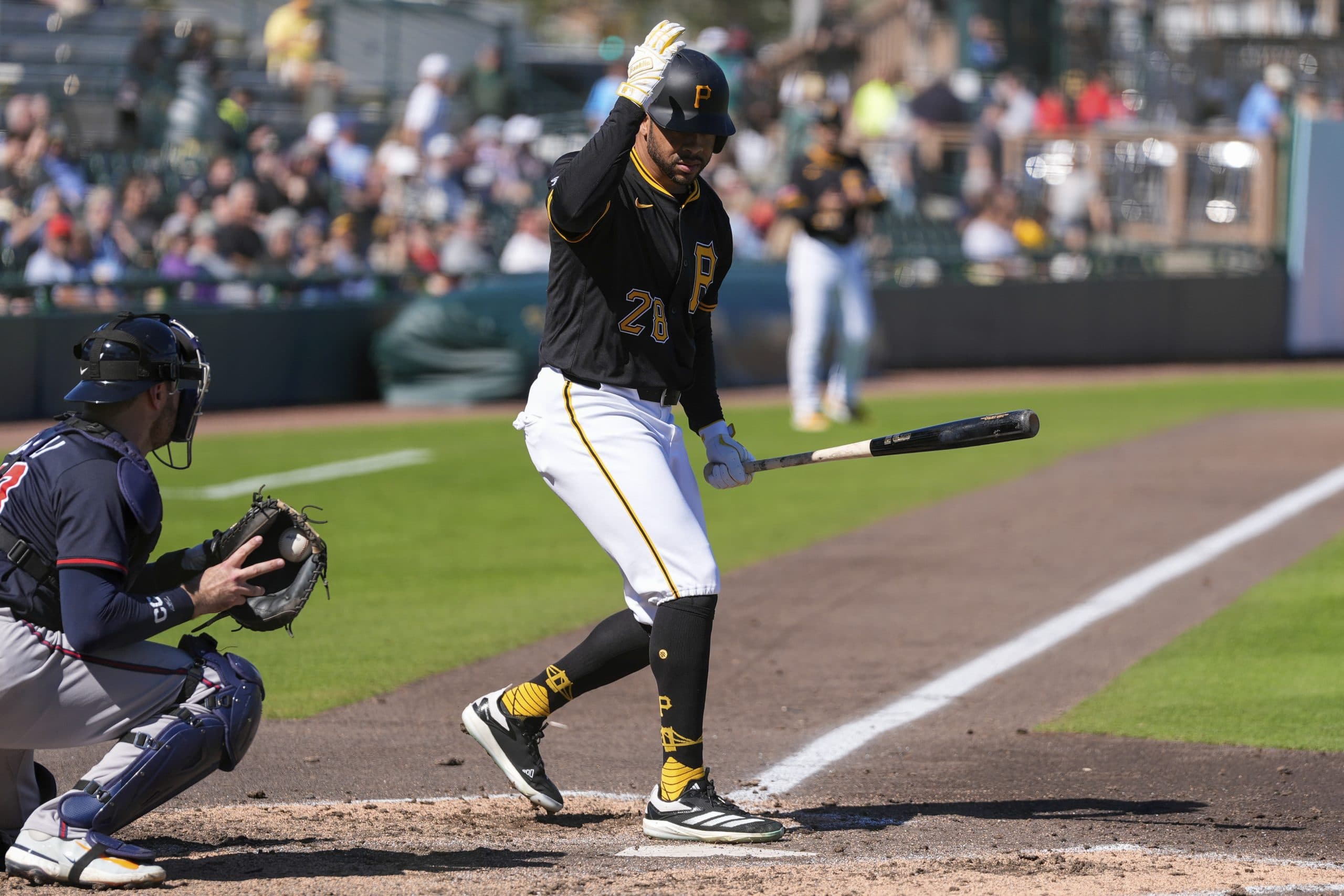
If you've been watching baseball lately, or even scrolling through social media highlights, you've probably noticed players tapping their helmet or cap right after a pitch is called. It looks casual, almost like a nervous habit. But in 2026, that tap means something very specific, and it's changing baseball in a way fans haven't seen in over a century.
Here's everything you need to know about what tapping your helmet means in baseball.
The Short Answer: It's an ABS Challenge
The player taps his cap or helmet to alert the umpire to his desire to challenge the ball-strike call. This is officially known as the ABS Challenge System — short for Automated Ball-Strike — and starting with the 2026 MLB season, it's the real deal in the big leagues.
When a batter thinks a pitch was actually a ball, or a pitcher believes his strike was wrongly ruled a ball, that quick tap to the helmet is how they formally request a review. Players are also encouraged to verbalize their challenge, to leave nothing to doubt, but the cap or helmet tap represents the official challenge.
What Is the ABS Challenge System?
The ABS Challenge System is the compromise MLB landed on after years of debate over "robot umpires." Rather than having a computer call every single pitch, which turned out to be widely unpopular, the ABS Challenge System gives teams the opportunity to request a quick review of some of the most important ball-strike calls in a given game.
With Hawk-Eye technology running in the background and monitoring the exact location of each pitch relative to the batter's zone, players can request a challenge of a ball or strike call they feel the umpire got wrong. When a call is challenged, the Hawk-Eye view is transmitted over a 5G private network and nearly instantaneously shown to those in attendance via the videoboard and to home viewers via the broadcast. The ball-strike call is then either confirmed or overturned.
Think of it like a challenge flag in football. Except instead of a coach throwing a flag, a batter or pitcher taps their helmet.
Who Can Tap Their Helmet?
This is where it gets interesting. Not just anyone on the field can trigger a challenge. The batter, the pitcher, or the catcher can challenge an umpire's call. No one else, not even the manager, may do so. Challenges must be made immediately after the umpire's call, without assistance from the dugout or other players.
Some teams have already indicated that they will forbid their pitchers from challenging, preferring they defer to the catcher's vantage point. That makes sense. The catcher crouches directly behind the plate and likely has the best sightline on every pitch.
There's also a timing element: the request must come right after the pitch, roughly within two seconds. If there is an ensuing play, such as a checked-swing appeal or a play involving a runner, the challenge may be made at the conclusion of the play.
How Many Challenges Does Each Team Get?
Each team starts with two challenges at the beginning of each game. If it succeeds, meaning the umpire's decision is overturned, the team keeps that challenge. If it fails, it's lost.
That wrinkle alone introduces a strategic element: burn a challenge early in a non-important spot, or save it for a critical late-game at-bat? It's the same kind of game theory that makes challenge systems in other sports so compelling to watch.
For extra innings, any team that starts an extra inning out of challenges will get one challenge for the 10th inning. If they exhaust that challenge, they will get another challenge for the 11th, and so on.
How Does the Review Actually Work?
Once the helmet tap is made, things move fast. An animated pitch result graphic is shown to those in attendance via the video board and to home viewers via the broadcast. The graphic shows exactly where the ball crossed (or didn't cross) the plate, and whether it was too high, too low, or inside or outside the strike zone.
The whole thing barely slows down the game. In 288 games with the ABS Challenge System during Spring Training 2025, there were an average of 4.1 challenges per game, and those challenges took an average of 13.8 seconds.
To put that in perspective: that's less time than it takes most pitchers to adjust their grip between pitches.
How Accurate Is the System?
Surprisingly accurate, and increasingly so as players learn to use it wisely. During Spring Training, players challenged 2.6% of all called pitches, and the overturn rate was 52.2%.
That means when players tap their helmet, they're right more often than not. Interestingly, during Spring Training, defensive players (pitchers and catchers) were more successful in their challenges (54.4%) than hitters (50.0%).
The overturn rate also trends downward as games progress, from 60% in innings one through three to 51% in innings four through six to 43% in innings seven and eight. Players may get more cautious, or umpires may get more locked in, as the game wears on.
Why Not Just Let Computers Call Every Pitch?
This was the original vision. But when MLB tested full ABS (no challenges, just total automation), the results were mixed at best. In MiLB games featuring full ABS, walks were more prevalent, causing games to drag on and countering the improvements in pace made by the pitch clock. Also, the art of pitch framing, a craft catchers have studied and in many cases mastered, would go away with full ABS. This is a change the players generally do not support.
The Challenge System is seen as a way to get more of the most important calls correct without dramatically altering the sport overnight. It is a middle ground between full ABS and tradition.
The fans agree. Of the fans surveyed by MLB in Spring Training, 72% said the Challenge System had a positive impact on their experience. Moving forward, 69% of those surveyed said they would like the sport to go ahead with ABS versus 31% in favor of continuing with human umpires alone.
How Long Has This Been in the Works?
A lot longer than most fans realize. The full ABS system was first used in the independent Atlantic League in 2019. The Challenge System was first used in the Florida State League in 2022. During the 2023 and 2024 Triple-A seasons, both the Challenge System and full ABS were tested. By the end of 2024, full ABS had been pushed aside in favor of the Challenge System, which continued to be used in 2025.
The Joint Competition Committee voted in September 2025 to officially bring it to the majors for the full 2026 season, making this year a genuine landmark moment in baseball history.
Where Will the Helmet Tap NOT Be Used in 2026?
While the system is in virtually every MLB park, there are a few exceptions. The lone exceptions for 2026 will be the Mexico City Series, the Field of Dreams game, and the Little League Classic, none of which will be played in an MLB park and therefore will not have the infrastructure to support the system.
The Helmet Tap Is Now Part of Baseball Strategy
What was once just a nervous tic or a meaningless gesture has become one of the most loaded moments in a modern baseball game. When a batter reaches up and taps their helmet after a borderline called strike three, the entire ballpark locks in. Is the call about to be overturned? Did they just waste their last challenge?
It's the kind of strategic theater that baseball has always done best, tension packed into small, deliberate gestures. The helmet tap is already becoming one of those signature baseball moments, like a manager walking to the mound or a catcher popping up to frame a low pitch.
And if you want to understand what the ABS system means for the people calling the balls and strikes, check out our breakdown of how much MLB umpires make in 2026, because their role is changing too.
External Resources
Want more baseball takes delivered to your inbox? Subscribe to Up in the Rafters for smart, sharp sports coverage all season long.