Up in The Rafters
What Is OPS in Baseball?
OPS in baseball means On-base Plus Slugging. Learn the formula, what a good OPS looks like, and the all-time leaders in this essential hitting stat.
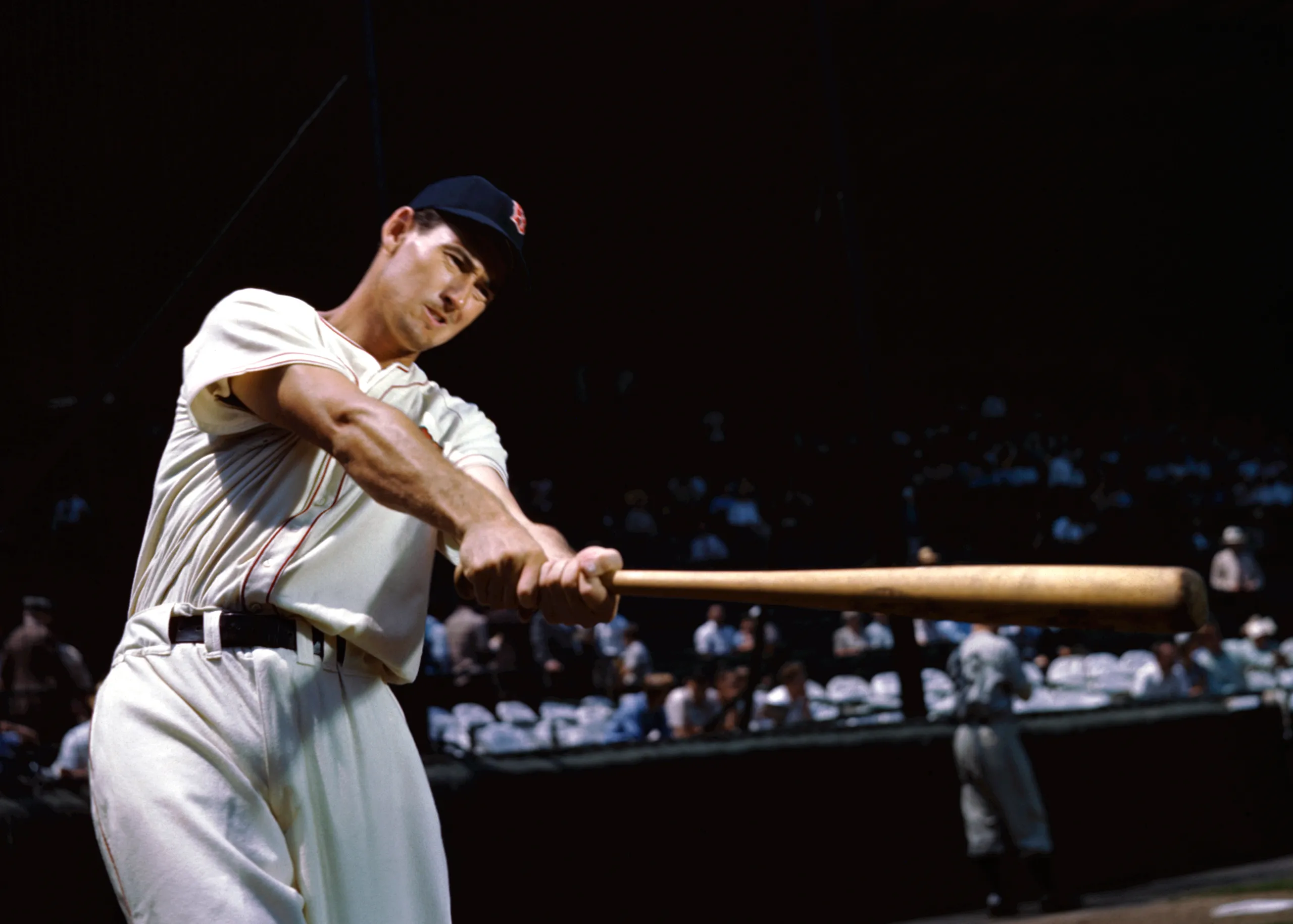
OPS stands for On-base Plus Slugging. It is a single number that combines two key offensive statistics: On-base Percentage (OBP) and Slugging Percentage (SLG). OPS adds on-base percentage and slugging percentage to get one number that unites the two. It is meant to combine how well a hitter can reach base, with how well he can hit for average and for power.
The formula is dead simple:
OPS = OBP + SLG
That is it. Take a player's on-base percentage, add their slugging percentage, and you have their OPS. Despite how easy it is to calculate, it tells you more about an offensive player than batting average, home runs, or RBIs ever could on their own.
Why OPS Matters
Batting average only measures whether a batter got a hit. It does not count walks, it treats a single the same as a triple, and it completely ignores power. RBIs depend heavily on how often teammates are on base. Neither stat does a great job of isolating a hitter's individual contribution.
OPS fixes that by capturing both halves of offensive value:
Can this hitter avoid making outs and get on base consistently?
Can this hitter do damage when he makes contact?
Traditional stats like batting average do not account for walks or the value of extra-base hits, whereas OPS encompasses these factors, giving a clearer picture of a player's overall effectiveness at the plate.
OPS gained popularity because of the availability of its components, OBP and SLG, and because team OPS correlates well with team runs scored. That correlation with run scoring is what makes it so useful. Teams that score runs win games. OPS tracks that connection better than the old-school stats.
The History of OPS
On-base plus slugging was first popularized in 1984 by John Thorn and Pete Palmer's book, The Hidden Game of Baseball. The New York Times then began carrying the leaders in this statistic in its weekly column, a feature that continued for four years. Baseball journalist Peter Gammons used and promoted the statistic, and other writers and broadcasters picked it up. By 2004 it began appearing on Topps baseball cards.
It went from a niche analytical tool to a mainstream broadcast staple in about two decades.
Breaking Down the Two Components
On-base Percentage (OBP)
OBP measures how often a player reaches base safely per plate appearance. It includes hits, walks, and times hit by a pitch, but does not account for errors or fielder's choice.
The formula:
OBP = (H + BB + HBP) / (AB + BB + SF + HBP)
Where:
H = Hits
BB = Walks (Base on Balls)
HBP = Hit by Pitch
AB = At-Bats
SF = Sacrifice Flies
A player with a .400 OBP reaches base 40% of the time. That is an elite number. Ted Williams holds the all-time career OBP record at .4817. His ability to work the count and lay off bad pitches was historic.
Slugging Percentage (SLG)
SLG measures a player's power-hitting ability by calculating the total number of bases achieved per at-bat. Unlike OBP, SLG assigns different weights to different types of hits.
The formula:
SLG = Total Bases / At-Bats
Total bases are calculated as:
Single = 1 base
Double = 2 bases
Triple = 3 bases
Home Run = 4 bases
So a player who goes 2-for-4 with a double and a home run has 6 total bases in 4 at-bats, for a slugging percentage of 1.500 in that game.
OPS Calculation: A Real Example
In 2024, Shohei Ohtani recorded a .390 on-base percentage and .646 slugging percentage. Adding OBP and SLG: .390 + .646 = 1.036. Ohtani had a 1.036 OPS in 2024, making him an elite hitter for that season.
That is about as clean an example as it gets. High OBP, massive power, elite result.
What Is a Good OPS? The Scale Explained
Here is how OPS values break down by quality tier. These are widely accepted benchmarks used across baseball analysis:
OPS Range | Rating |
.900 and above | Elite / MVP-level |
.833 to .899 | Very Good |
.767 to .832 | Above Average |
.700 to .766 | Average |
.633 to .699 | Below Average |
.566 to .632 | Poor |
Below .566 | Very Poor |
A good on-base plus slugging percentage is anything above the league average, which is usually between .700 and .750.
In the 2024 season, the league average OPS was around .711, while elite hitters consistently achieve scores above .800.
An OPS above 1.000 for a full season is genuinely rare and signals an MVP-caliber performance. Players with an OPS above 1.000 are regarded as elite hitters.
All-Time Career OPS Leaders
Babe Ruth is the all-time leader with a career 1.1636 OPS. Ted Williams (1.1155), Lou Gehrig (1.0798), Oscar Charleston (1.0632), Barry Bonds (1.0512), Jimmie Foxx (1.0376), Turkey Stearnes (1.0340), Mule Suttles (1.0176), Hank Greenberg (1.0169), and Rogers Hornsby (1.0103) are the only other players with a career OPS over 1.000.
Rank | Player | Career OPS |
1 | Babe Ruth | 1.1636 |
2 | Ted Williams | 1.1155 |
3 | Lou Gehrig | 1.0798 |
4 | Oscar Charleston | 1.0632 |
5 | Barry Bonds | 1.0512 |
6 | Jimmie Foxx | 1.0376 |
7 | Turkey Stearnes | 1.0340 |
8 | Mule Suttles | 1.0176 |
9 | Hank Greenberg | 1.0169 |
10 | Rogers Hornsby | 1.0103 |
Every player on that list has a career OPS above 1.000. That is the company you have to keep to be considered one of the greatest hitters of all time.
For context on the active era, the single-season record belongs to Barry Bonds. Barry Bonds set the single-season OPS record in 2004 with a 1.422 OPS. That season is widely considered one of the most statistically dominant offensive performances in baseball history.
OPS+ : The Smarter Version
OPS has one major flaw. It does not account for where a player plays. Hitting at Coors Field in Denver, where the high altitude makes the ball carry further, inflates offensive numbers. Playing at a pitcher-friendly park in the 1960s deflates them. Comparing a raw OPS across different eras or stadiums is not entirely fair.
That is where OPS+ comes in.
OPS+ takes a player's on-base plus slugging percentage and normalizes the number across the entire league. It accounts for external factors like ballparks. It then adjusts so a score of 100 is league average, and 150 is 50 percent better than the league average.
OPS+ Score | What It Means |
160+ | All-time great level |
140 to 159 | Elite |
120 to 139 | Very good |
110 to 119 | Above average |
100 | Exactly league average |
80 to 99 | Below average |
Below 80 | Poor |
Career OPS+ leaders include Babe Ruth (206), Ted Williams (191), Oscar Charleston (184), Barry Bonds (182), Lou Gehrig (179), and Aaron Judge (178) among the all-time best.
Aaron Judge at number six all-time in career OPS+ is a reminder that we are watching something historically special in the current era.
OPS vs. Batting Average: Why OPS Wins
For decades, batting average was the go-to stat for evaluating hitters. If someone hit .300, they were good. If they hit .250, they were ordinary. The problem is that batting average misses too much.
Stat | What It Measures | What It Misses |
Batting Average | Hit rate | Walks, extra-base power |
Home Runs | Power | Contact, OBP |
RBIs | Runs batted in | Heavily dependent on teammates |
OPS | Getting on base + power hitting | Park effects, era context |
A player who hits .280 but walks constantly and hits for extra bases is more valuable than a .300 hitter who never walks and hits only singles. OPS captures that difference. Batting average does not.
The Criticism of OPS: Where It Falls Short
OPS is not perfect. Analysts have two main criticisms.
1. It treats OBP and SLG as equally valuable.
They are not. Many sabermetricians note that OBP is roughly twice as important as SLG in terms of its effect on run scoring (1.8 times to be exact). Adding them together as if they are equal slightly overstates the importance of slugging relative to on-base ability.
2. It does not adjust for context.
Raw OPS does not account for the era a player competed in, the parks they played in, or the league's overall offensive environment. That is why OPS+ exists.
More advanced metrics like wOBA (Weighted On-Base Average) and wRC+ (Weighted Runs Created Plus) attempt to address both of those issues by using linear weights to assign proper value to each offensive event. However, those stats are harder to calculate and less widely understood. OPS has value as a metric because it is accepted and used more widely than other, more accurate statistics while also being a relatively accurate representation of offense.
OPS for Pitchers: OPS Against
OPS is not just a hitting stat. It can also be used in evaluating pitchers; when used in that context, it is referred to as OPS against. A pitcher with a low OPS against is limiting hitters' ability to reach base and hit for power, which is exactly what you want from your rotation and bullpen.
Quick Reference Summary
Question | Answer |
What does OPS stand for? | On-base Plus Slugging |
How is OPS calculated? | OBP + SLG |
What is a good OPS? | .800 and above is above average |
What is an elite OPS? | .900 and above |
What is the all-time career OPS record? | Babe Ruth at 1.1636 |
What is the single-season OPS record? | Barry Bonds in 2004 at 1.422 |
What is the league average OPS? | Roughly .700 to .750 |
What is OPS+? | OPS adjusted for park and era, with 100 as league average |
OPS is the easiest shortcut to understanding how dangerous a hitter truly is. It is not perfect, but it packs more information into one number than batting average ever could. When you see a player sitting above .900, you are looking at one of the best hitters in the league. When someone is hovering around .700, they are a league-average bat at best.
For a deeper statistical dive, visit MLB's official OPS glossary or the career leaderboard at Baseball Reference.
Want more MLB coverage? Check out our breakdown of how much MLB umpires make and our deep dive into how Mariano Rivera's cutter changed pitching forever.
Subscribe to Up in the Rafters at upintherafters.com/subscribe for sharp, data-driven sports takes straight to your inbox.