Up in The Rafters
How Long Is a Hockey Game? What 1,308 NHL Game Sheets Actually Say
A hockey game is 60 minutes of play, but an NHL game takes about two and a half hours. I went through every official game sheet from last season to show where the time goes, what overtime and shootouts add, and why playoff games can run four hours.

The 2026-27 NHL season opened on September 29 with the Carolina Hurricanes raising their Stanley Cup banner and then losing 1-0 to Florida in overtime. Gustav Forsling scored with five seconds left in the extra period. The puck dropped at 5:20 p.m. Eastern and the final horn went at 7:57. That's 2 hours and 37 minutes for a game with exactly one goal in it.
That's basically the answer. A hockey game is 60 minutes of play, and an NHL game takes about two and a half hours in real life.
I didn't want to guess at that number, so I went through the NHL's official game summary for every 2025-26 regular-season game that listed a start and end time. That's 1,308 games, plus all 82 playoff games. Every sheet logs the minute the puck dropped and the minute the game ended. The average regular-season game ran 2 hours and 32 minutes.
Here's where all that time goes, what overtime and shootouts add, and why playoff hockey is a different animal.
How Many Periods Are in Hockey?
Three. Each period is 20 minutes of game clock, so regulation is 60 minutes. Rule 77 of the NHL's 2026-27 rulebook puts it plainly: "three (3) twenty-minute periods of actual play with a rest intermission between periods."
The clock is why a 60-minute game takes 150. It stops on every whistle: icings, offsides, pucks over the glass, penalties, goals, the goalie freezing the puck. There's no running clock and no stoppage time like soccer. If the puck isn't live, the clock isn't moving.
College hockey uses the same three 20-minute periods. Youth, high school and adult rec leagues often play shorter periods, and that's up to the league and how much ice time it books. If you're asking because your kid has a game on Saturday, the league's own rules are the place to check.
How Long Is an Intermission in Hockey?
Eighteen minutes, and there are two of them: one after the first period and one after the second. The rulebook says the intermission clock doesn't start until the last official has left the ice, so the real gap between periods runs a little longer than 18 minutes.
There's no intermission before regular-season overtime. The crew shovels the ice, the teams stay at their benches, and the rulebook says overtime should start about two minutes after regulation ends. Playoff overtime is different. Per Rule 84.5, teams take a 15-minute intermission and then play full 20-minute periods.
Where the Other 90 Minutes Go
Sixty minutes of hockey plus 36 minutes of intermissions only gets you to 96. The rest is TV breaks and all the small stuff.
Piece of the game | Time | What it is |
Three periods | 60 minutes | Game clock only |
Two intermissions | 36+ minutes | 18 minutes each, starting once the officials leave the ice |
TV timeouts | About 18 minutes | Three per period, about two minutes each |
Everything else | About 38 minutes | Whistles, faceoffs, goals, reviews, penalties, fights |
Average 2025-26 game | 2 hours, 32 minutes | Puck drop to final horn, 1,308 games |
On the TV timeouts: NHL games get three commercial breaks a period, taken at the first eligible whistle after the 14:00, 10:00 and 6:00 marks. Rule 87 also blocks a commercial break right after a goal, and right after an icing, so the team that iced it can't use the ad break to rest tired legs. Each team also gets one 30-second timeout per game.
Goals add time, but less than you'd think. In 2025-26 regulation games with three goals or fewer, the average game took 2:27. Games with eight or more goals averaged 2:32. That's five minutes for all those celebrations, replays and center-ice faceoffs. On October 1 this year, Edmonton beat the Canucks 9-7 in Vancouver, 16 goals in total, and the whole thing took 2:37. The slowest game of opening week? A 4-1 Vancouver win over Calgary on October 3 that ran 2:48. Hockey doesn't always make sense.
Baseball had its own fight with the clock and added a pitch clock to speed things up, which I wrote about in how the 2023 baseball rule changes reshaped the game. And if you want to know why innings don't have a set length at all, here's how innings work in baseball.
How Long Is Overtime in Hockey?
In the regular season, overtime is one five-minute, 3-on-3, sudden-death period. If nobody scores, it goes to a shootout: three shooters per team, then sudden death until one team scores and the other doesn't. I broke down every rule, including how penalties change the 3-on-3, in how overtime works in hockey.
Here's what each ending did to the clock last season:
How the game ended | Games | Average length |
Regulation | 984 | 2 hours, 30 minutes |
3-on-3 overtime | 206 | 2 hours, 35 minutes |
Shootout | 118 | 2 hours, 44 minutes |
All 2025-26 regular-season games | 1,308 | 2 hours, 32 minutes |
About one game in four (324 of 1,308) went past regulation. Overtime only adds about five minutes on average because 3-on-3 rarely lasts long. The average overtime winner last season came 2 minutes and 26 seconds in, and about two-thirds of them came in the first three minutes. Shootouts are the real time sink. You get the full overtime, a second round of shoveling, and then the shootout itself, which adds about 14 minutes over a regulation game.
The longest regular-season game of 2025-26 was Nashville's 5-4 shootout win in Los Angeles on April 2. It ran 3 hours and 9 minutes. Only four regular-season games went past three hours all year. On the other end, 60 games finished in 2:20 or less.
My take: 3-on-3 overtime is the best thing the NHL has added in my lifetime, and the shootout is the worst way to end a hockey game that we still use. A breakaway contest decided 118 games last season. I'd rather see a longer 3-on-3 and fewer of those.
Playoff Overtime Has No Time Limit
The playoffs throw out the shootout entirely. If a game is tied after 60 minutes, the teams take a 15-minute intermission and play a full 20-minute, 5-on-5 overtime period. If that ends tied, they do it again. And again. The first goal wins, whenever it comes.
That changes the math. In the 2026 playoffs, games settled in regulation averaged 2 hours and 37 minutes, seven minutes longer than regular-season regulation games. The 22 games that went to overtime averaged 3 hours and 15 minutes. Four went to double overtime, and every one of them ran about four hours:
Game | Date | Result | Puck drop to final horn |
Senators at Hurricanes | April 20, 2026 | Hurricanes 3-2 (2OT) | 3 hours, 59 minutes |
Stars at Wild | April 22, 2026 | Stars 4-3 (2OT) | 4 hours, 2 minutes |
Mammoth at Golden Knights | April 29, 2026 | Golden Knights 5-4 (2OT) | 3 hours, 58 minutes |
Hurricanes at Golden Knights, Stanley Cup Final Game 3 | June 6, 2026 | Golden Knights 5-4 (2OT) | 4 hours, 1 minute |
Carolina lost that Final game and still won the Cup, which is how you end up raising a banner on opening night.
The Longest NHL Games Ever
Four hours is nothing next to the record books. According to the NHL's official records, these are the longest games in league history, measured in actual game time:
Rank | Game | Date | Overtimes | Total game time | Winning goal |
1 | Red Wings 1, Maroons 0 | March 24, 1936 | 6 | 176:30 | Mud Bruneteau |
2 | Maple Leafs 1, Bruins 0 | April 3, 1933 | 6 | 164:46 | Ken Doraty |
3 | Flyers 2, Penguins 1 | May 4, 2000 | 5 | 152:01 | Keith Primeau |
4 | Lightning 3, Blue Jackets 2 | August 11, 2020 | 5 | 150:27 | Brayden Point |
5 | Ducks 4, Stars 3 | April 24, 2003 | 5 | 140:48 | Petr Sykora |
6 | Panthers 3, Hurricanes 2 | May 18, 2023 | 4 | 139:47 | Matthew Tkachuk |
The 1936 game is ridiculous. Detroit and the Montreal Maroons played almost three full games. Per NHL.com, Bruneteau, a rookie who'd scored two goals all season, ended it at 2:25 in the morning. Detroit goalie Normie Smith reportedly made 92 saves.
Canucks fans get a spot on the list too. Henrik Sedin ended Game 1 of Vancouver's 2007 first-round series against Dallas in the fourth overtime, after 138:06 of game time. That's the eighth-longest game the NHL has ever played.
Hockey Game Length at Other Levels
Level | Regulation | Tied after 60 (regular season) | Tied after 60 (postseason) |
NHL | 3 x 20 minutes | 5-minute 3-on-3 OT, then a shootout | 20-minute 5-on-5 OT periods until a goal |
NCAA | 3 x 20 minutes | 5-minute 3-on-3 OT, then a shootout if the host conference uses one. Otherwise it's a tie | 20-minute sudden-victory OT periods |
Yes, college hockey can still end in a tie. The NCAA made five-minute 3-on-3 overtime mandatory starting in 2020-21, and a 2022-23 rule change lets a three-person shootout settle any regular-season game, following the host school's conference policy. In conference tournaments and the NCAA tournament, the rules call for full 20-minute overtime periods, same idea as the Stanley Cup Playoffs.
So How Much Time Should You Block Off?
For a regular-season NHL game, plan on two and a half hours from puck drop. Puck drop isn't always the listed start time either. That opening-night game in Raleigh was listed for 5 p.m. Eastern. With the banner ceremony first, the puck didn't drop until 5:20.
For a playoff game, plan on three hours and don't make plans for after. Overtime in May doesn't care about your babysitter.
The season is also longer than it used to be. The NHL went to 84 games per team this year, up from 82, so the league now plays two more games per team than the NBA's 82-game season. At last season's average, watching every one of your team's games takes about 212 hours. Through the first 43 games of 2026-27, the average is 2:34, nine games have gone to overtime, and there hasn't been a shootout yet.
Final Thoughts
A hockey game is three 20-minute periods, two 18-minute intermissions, and a lot of whistles. In the NHL that comes out to about 2 hours and 32 minutes, a little longer with a shootout, and anywhere from three to four-plus hours once playoff overtime starts.
How I got the numbers: the NHL publishes an official game summary for every game, like this one for the 2026-27 opener. Each one lists start and end times to the minute. I pulled 1,308 of the 1,312 sheets from the 2025-26 regular season (the other four didn't return usable times), all 82 playoff games, and every 2026-27 game through October 5. Because the times are rounded to the minute, any single game could be off by a minute either way. The averages hold up fine.
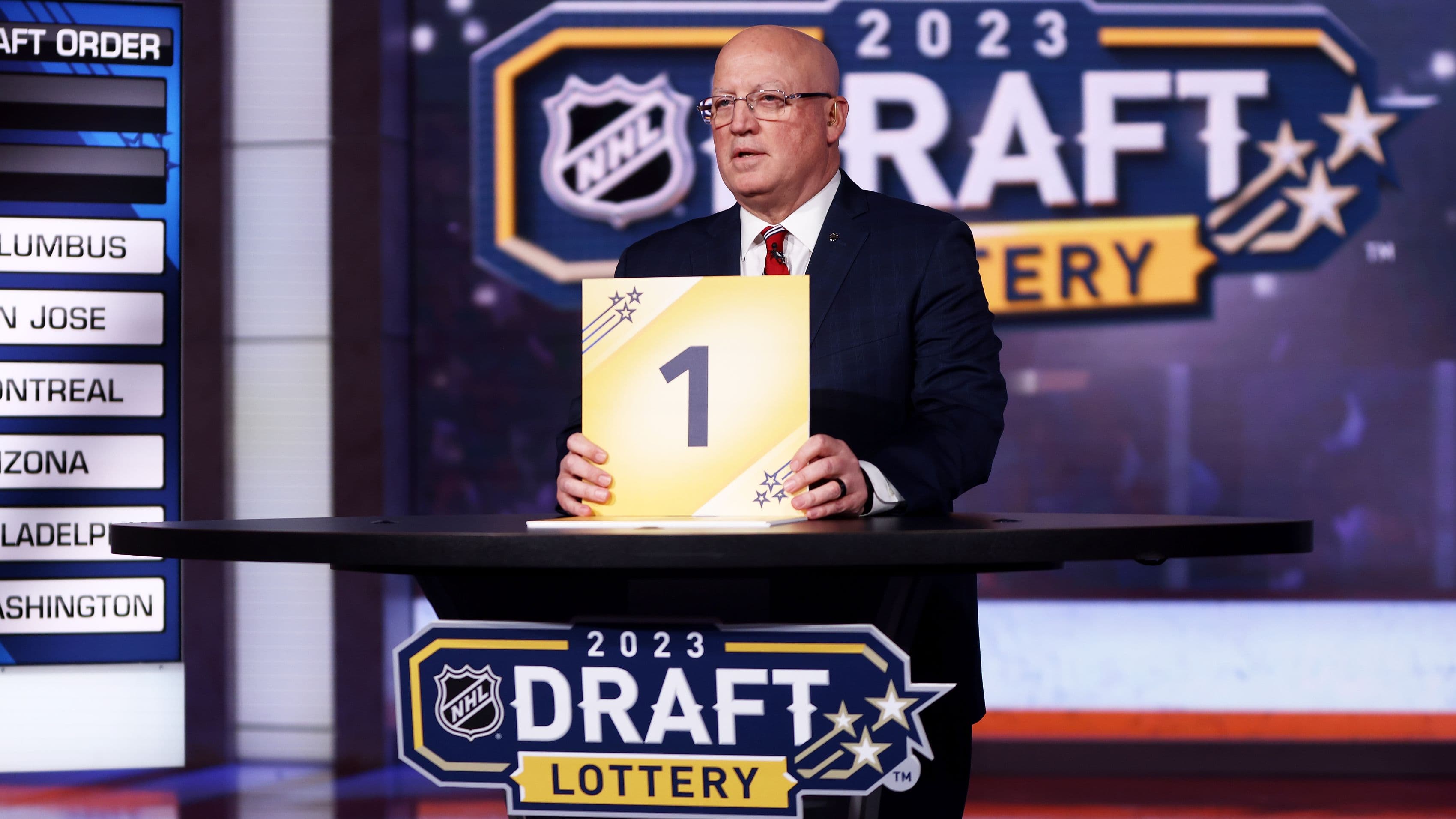
If you've got the season's other big hockey debates on your mind, I've argued about whether 70 goals or 100 assists is the bigger season, and I explained how the NHL draft lottery works for the fans whose teams are already thinking about June.
Sources:
NHL.com: March 24, Red Wings win longest game in NHL history
NHL official game summary: Panthers at Hurricanes, September 29, 2026
NHL official game summary: Stanley Cup Final Game 3, June 6, 2026
NCAA.com: PROP approves change to ice hockey overtime format
NCAA: 2022-23 men's and women's ice hockey playing rules changes